My Thoughts on… Hamnet
It’s been a fortnight of tears and anguish - and for once it’s not because of my writing progress (or lack thereof). No, it’s because I read Hamnet by Maggie O’Farrell. And then, as if that wasn’t enough of an emotional overload, I watched the film. My eyes were so swollen with crying I looked like Kermit the Frog!
So, what did I think of it? Was I crying because of how good it was? Or because of how bad it was?
Let’s find out…
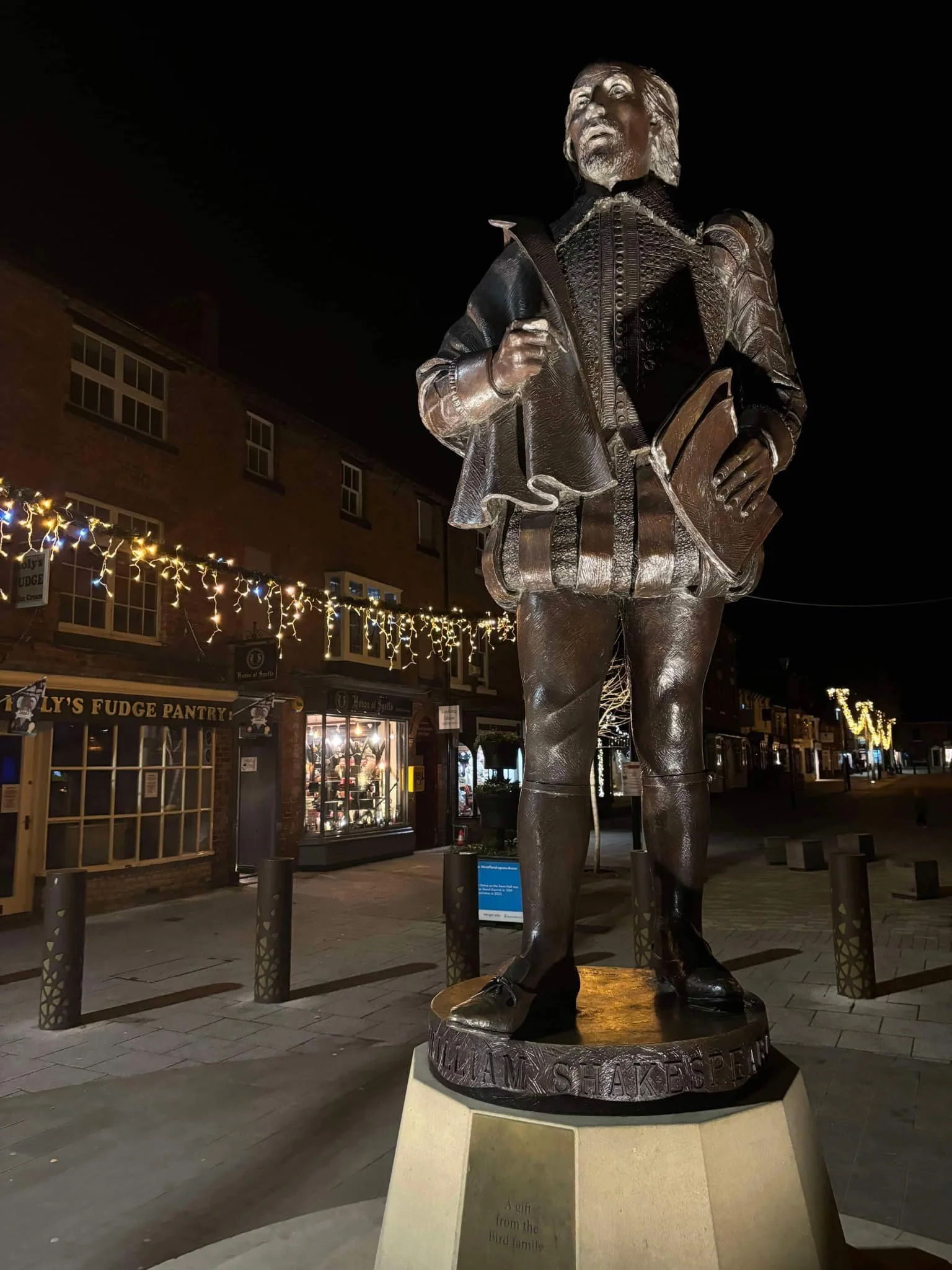
Standing proudly not far from his former home
Me and Shakespeare (Or Shakespeare and I…)
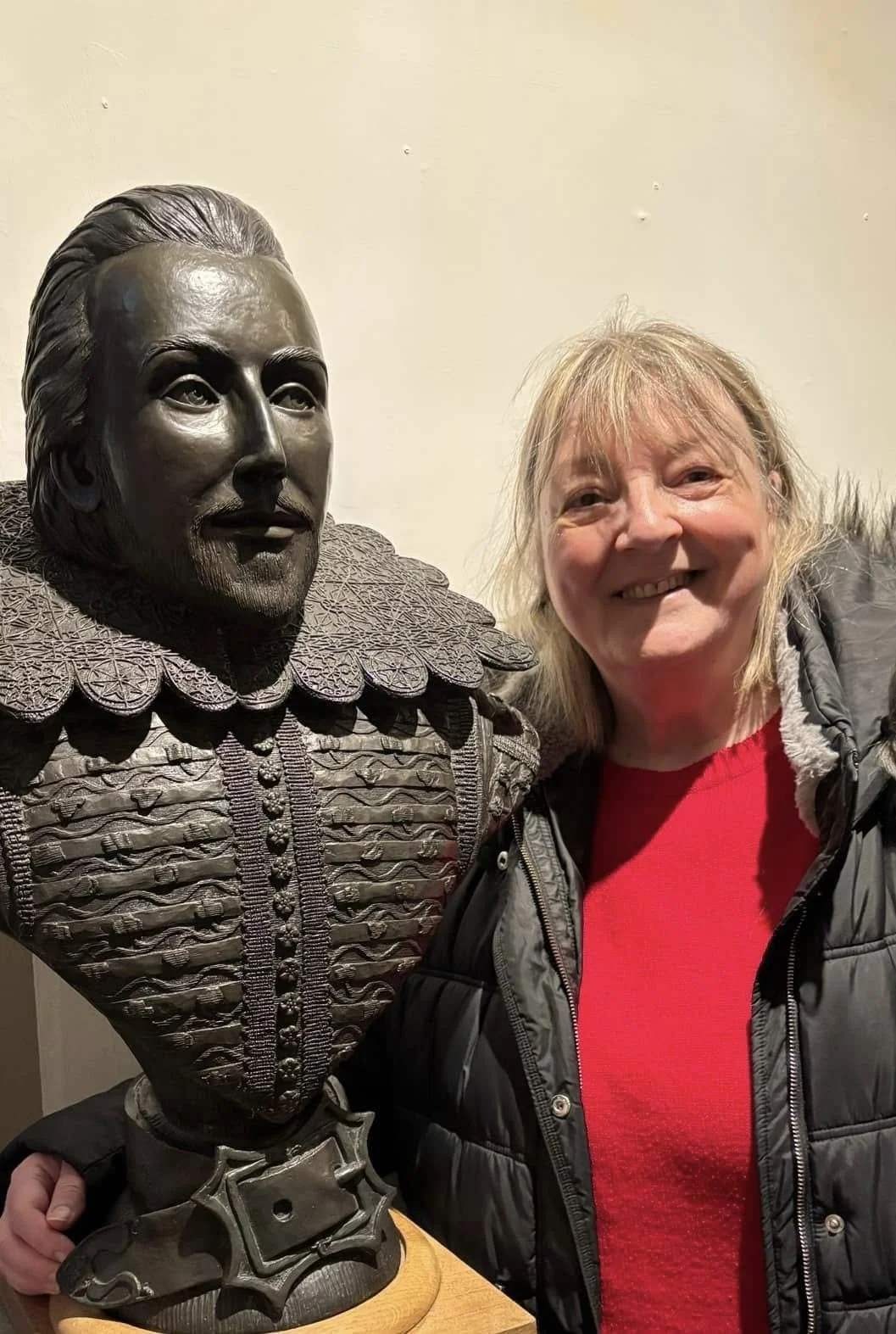
Me and my mate, Will. Excuse my hair - it was really windy outside!
After my last post about obsessions, you won’t be surprised to know that I once went through a phase of being obsessed with William Shakespeare. Now, if you’d told me that as a fifteen-year-old schoolgirl who was being forced to slog my way through Julius Caesar for my English Lit O level, I’d have laughed. Probably hysterically.
Julius Caesar from a dry and dusty text book is not a great introduction to the Bard, believe me. The teachers did their best. They even took us to York - or was it Leeds? - to watch a production of the play at the theatre. It didn’t help. I fell asleep. They’d have been better off letting us watch a screening of Carry On, Cleo. Now that I did love! “Infamy, infamy - they’ve all got it in for me!”
But when I was doing my literature degree with the Open University - I was a mature student - I had a decision to make. Every year we had a choice of modules and I had to decide what to do next. I’d done nineteenth century novelists. I’d done a module on creative writing. Which module should I choose?
One of the options was Shakespeare. I was really torn. I’d hated studying Julius Caesar at school, and if I’d ever caught one of his plays on television I’d quickly turned it over, as I really didn’t understand what they were talking about. Besides, Shakespeare was for posh people. Intelligent, literary types who could interpret his language. Not for people like me.
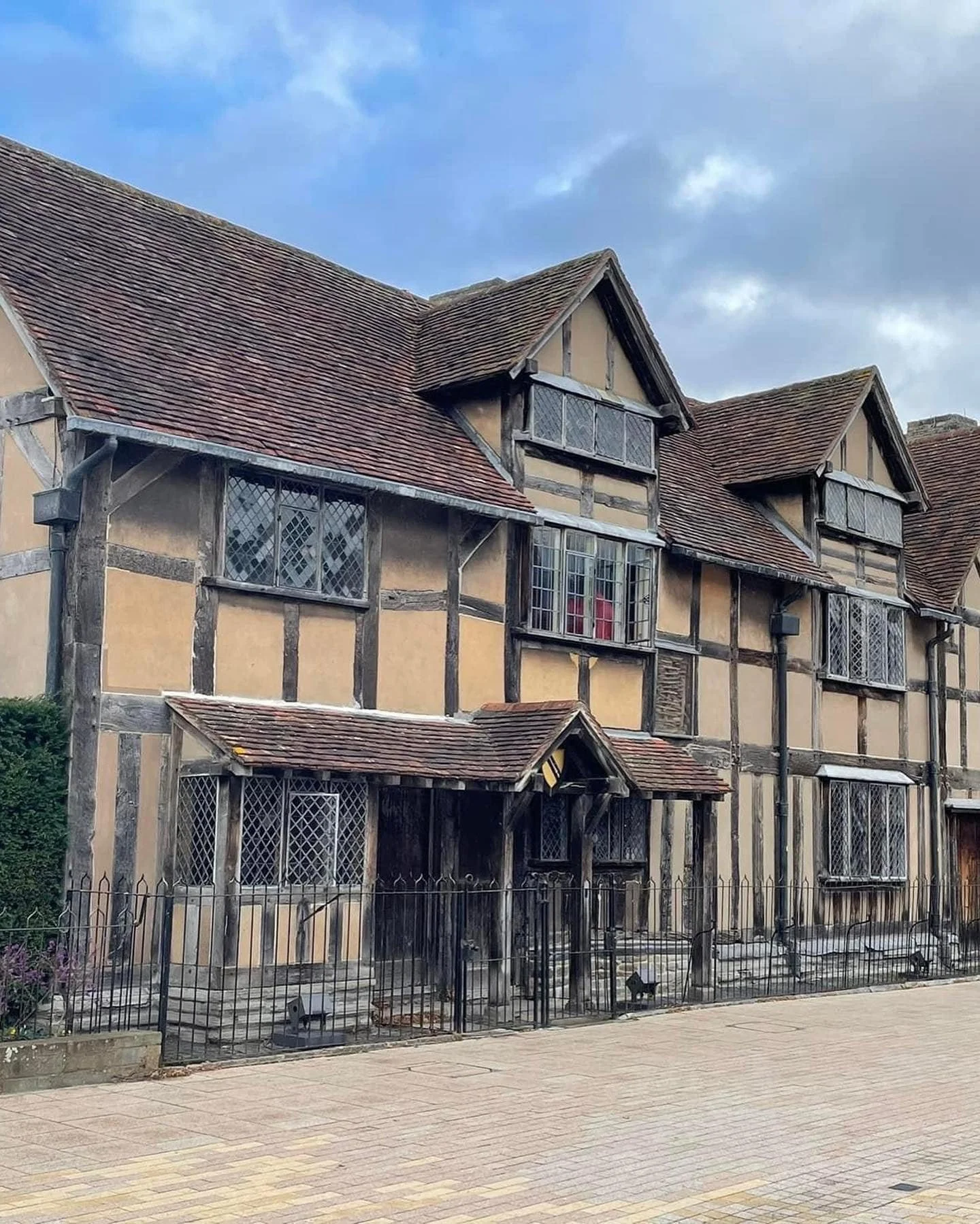
Shakespeare’s Birthplace. Awe-inspiring!
In the end, I decided that I just couldn’t contemplate studying for a degree in literature and not include William Shakespeare. I mean, when I think of literature I think of him first and foremost. He may be the bane of many schoolchildren’s lives, but he’s important. He matters. It would be unthinkable to leave him out of my degree. So l took a deep breath and signed up for the module.
Hang the Futtock On! He’s Winning Me Round!
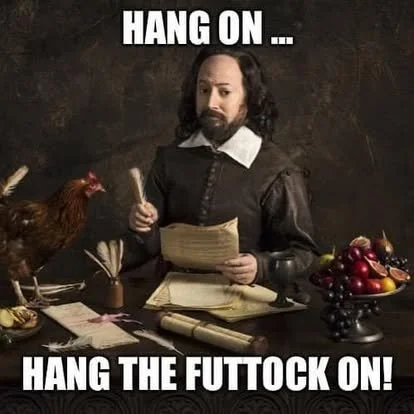
That Upstart Crow!
I’m so glad I did! That course changed my views on him completely. Studying his plays and his poetry, watching the recommended DVDs of his films, finding out a bit more about the most famous writer who ever lived, it altered everything for me. And yes, I did get a bit obsessed with him.
Now, I’ll be honest and say that I still don’t understand a lot of what he’s going on about. I was carefully guided through his plays with the Open University, and with the tutor’s help and the books we were given to help us understand the language, it began to make sense to me. But all these years later I’ve forgotten quite a lot of the stuff it took me so long to decipher. In fact, looking at the pages of my old Norton Shakespeare and reading all the notes I made in every margin I’m absolutely amazed at how much that course taught me.
Do those notes still make sense to me? Er, moving on…
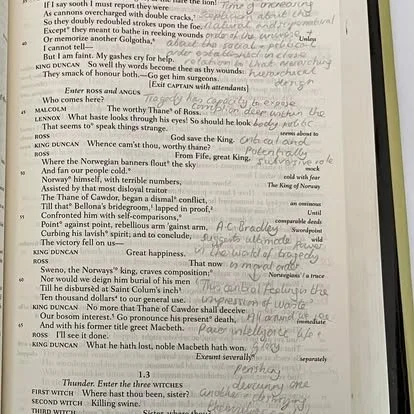
I must have been quite intelligent once!
I do remember, though, that I enjoyed many of the plays, and I also remember being very surprised by that. I recall the pleasure I felt when I worked out what he was saying, what I thought he meant by that, what the subtext was, and being able to put his words into context for the first time.
I remember I particularly loved Macbeth, Hamlet and A Midsummer Night’s Dream. (The DVD of A Midsummer Night’s Dream actually had me laughing out loud and I would not have believed that was possible!) I remember being amazed that I enjoyed Richard II, Antony and Cleopatra and Cymbeline. I also remember being quite disappointed by Twelfth Night which didn’t really impress me at all. Each to their own, I guess!
But it was his sonnets that were the real revelation. They were just so beautiful and so moving. They really touched me, and it was through the sonnets that I felt closer to Shakespeare as a person. So much so that long after my studies had ended I bought my own copy of the Sonnets to read purely for pleasure.
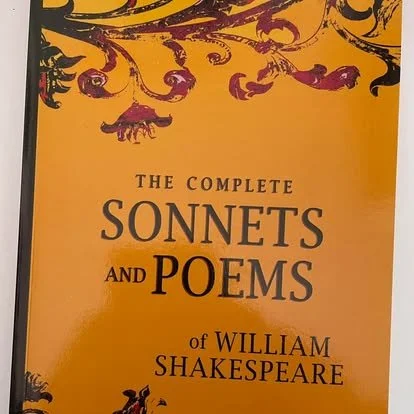
So beautiful…
Related Reading: Wonderland, Will, and Way Too Many Mugs
I studied really hard that year and duly passed my exam without too much angst. I was one of those weird people who enjoyed doing exams, but I had put a lot of effort into understanding Shakespeare and his work. Doing so left me with a real fondness for the man behind the words, and a curiosity about him, too. I’ve watched films about him such as Kenneth Branagh’s All is True, which stars Branagh as Shakespeare and Judi Dench as Anne. I loved, loved, loved the television show Upstart Crow written by Ben Elton and starring David Mitchell and Liza Tarbuck. I watched the Shakespeare Live from the RSC programme, which celebrated the 400th anniversary of his death, with tears streaming down my face and a genuine feeling of pride.
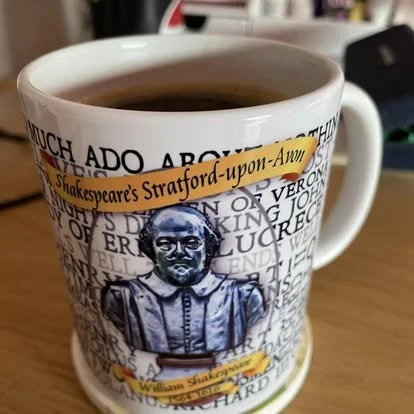
Of course I bought a mug! When do I not?
And I’ve seen many documentaries.
Oh, those documentaries! I’m sorry, but I have no truck with those people who say it can’t have been Shakespeare who wrote all those plays and poems, and try to make out that some upper class nobleman was responsible for them instead. I even saw one documentary where the presenter claimed that Shakespeare didn’t even exist, because not enough was known about him for him to be a real person!
I’ve been to Shakespeare’s Birthplace in Stratford-upon-Avon twice, and believe me there are more things known about him and his life than you’d expect. It’s the most fascinating place, and the guides are so helpful and clearly enthusiastic about the Shakespeares that they make the tour delightful. There’s someone in every room to explain things to you, answer your questions, and show you around. It’s well worth a visit.
When I was a child, William Shakespeare meant dry, dreary text, boredom, unintelligible language, and irrelevance. When I think of him these days, it’s with great affection and huge respect for his brilliant body of work. There’s just no one like him in the world.
So you’d think that when Maggie O’Farrell’s book, Hamnet, was published, I’d have dived straight in, wouldn’t you? But I didn’t. I bought a hardback copy and left it sitting on my shelf.
Reading Hamnet
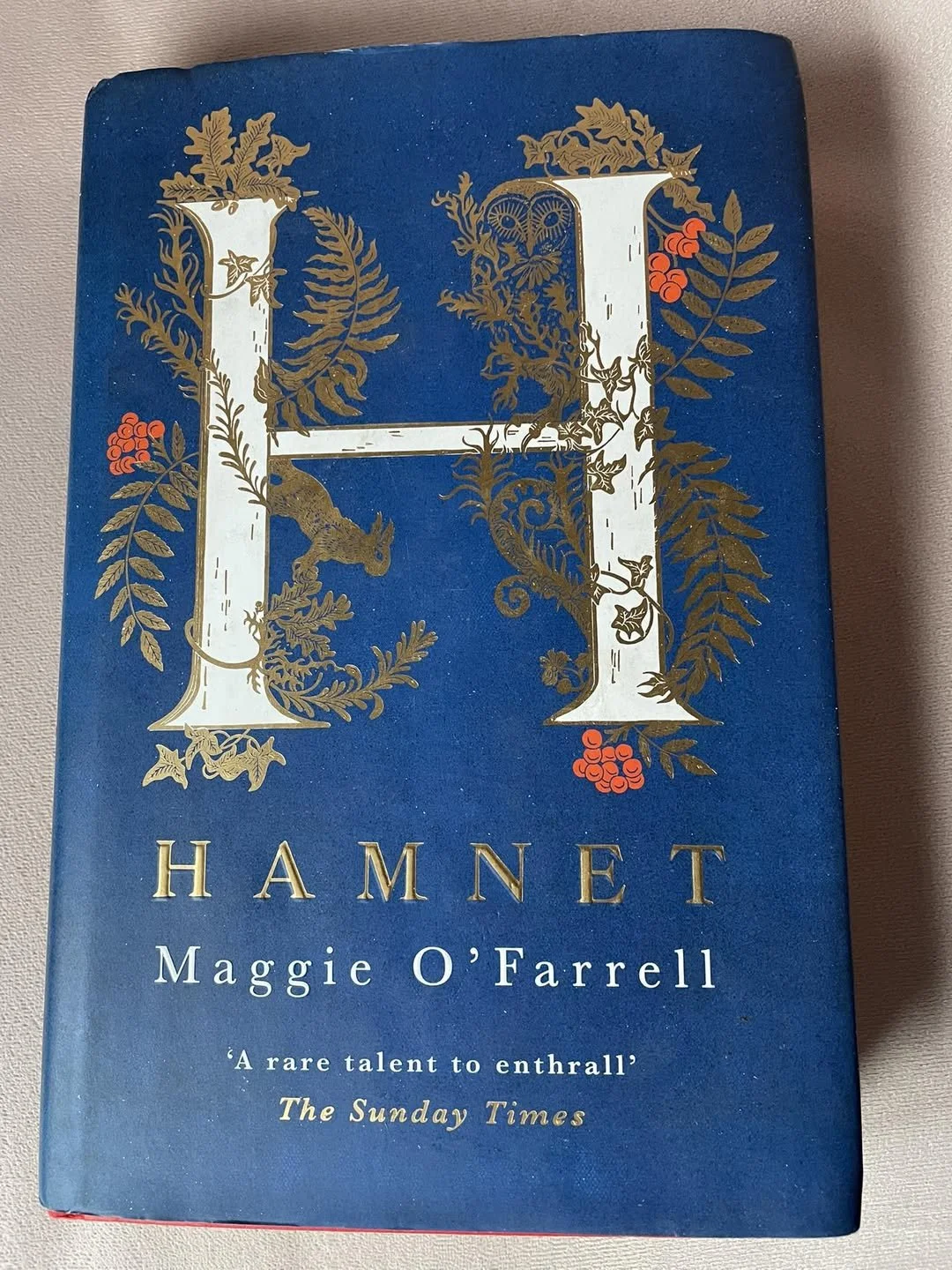
Love the beautiful cover
It remained there for some years. Why? Because, at that time, I was still a bit nervous of ‘literary fiction’, and as it began to win awards I had a horrible feeling it was going to be very dry and boring. Not for me at all.
Sometimes, I amaze even myself with how stupid I can be.
When the film of Hamnet was announced, I casually thought that I might watch it one day, when it appeared on mainstream TV or as part of one of my multiple subscriptions (sigh). I wasn’t planning on seeking it out. I really don’t know why, because I’d loved All is True.
But then I started to read the reviews and hear the critics’ comments. People seemed really divided. It started to intrigue me.
The clincher came when I watched a YouTube podcast with Maggie O’Farrell. She was lovely! So down-to-earth and funny and not at all the sort of person I’d imagine to win literary awards. (Whatever they look like!)
Related Viewing: Maggie O’Farrell on Fearne Cotton’s Happy Place
So I picked up my copy of Hamnet and I started to read. And I couldn’t put it down. Well, that’s not strictly true. At a certain point in the book I was so overwhelmed with grief and emotion that I had to stop reading for twenty minutes, go into the kitchen, make myself a coffee, sit and drink it and calm myself down before picking the book back up. Seriously!
I took the book up to bed with me, meaning to read another chapter or two before I went to sleep. At three o’clock in the morning, I finally closed the book, hugged it to me, and sobbed and sobbed.
Honestly, I can’t describe how beautiful this book is or how much I loved it. It fascinated me, it intrigued me, it broke my heart. The depiction of Agnes’s grief (in the book, Anne Shakespeare - formerly Hathaway - is known as Agnes, which is what her father named her in his will, suggesting this was her actual name) was so realistic and raw, I felt every moment of her pain. I grieved for her lost child. I wanted to hug Agnes and hold her while she sobbed. It was so real to me.
So naturally, I was decidedly worried about watching the Hamnet film, even though I really wanted to. What if they’d ruined the book? I’d watched a video on YouTube where two people I like and respect were talking about the film and they hated it. They thought it was badly done. It had left them cold. They were supposed to care about this family and their loss but they just… didn’t.
Now I knew what the book was like I was very much afraid that the film would be a massive let-down.
Even so, I knew I had to see it. So I paid to buy it and I watched it one afternoon while The Husband was at work and I knew there’d be no interruptions.
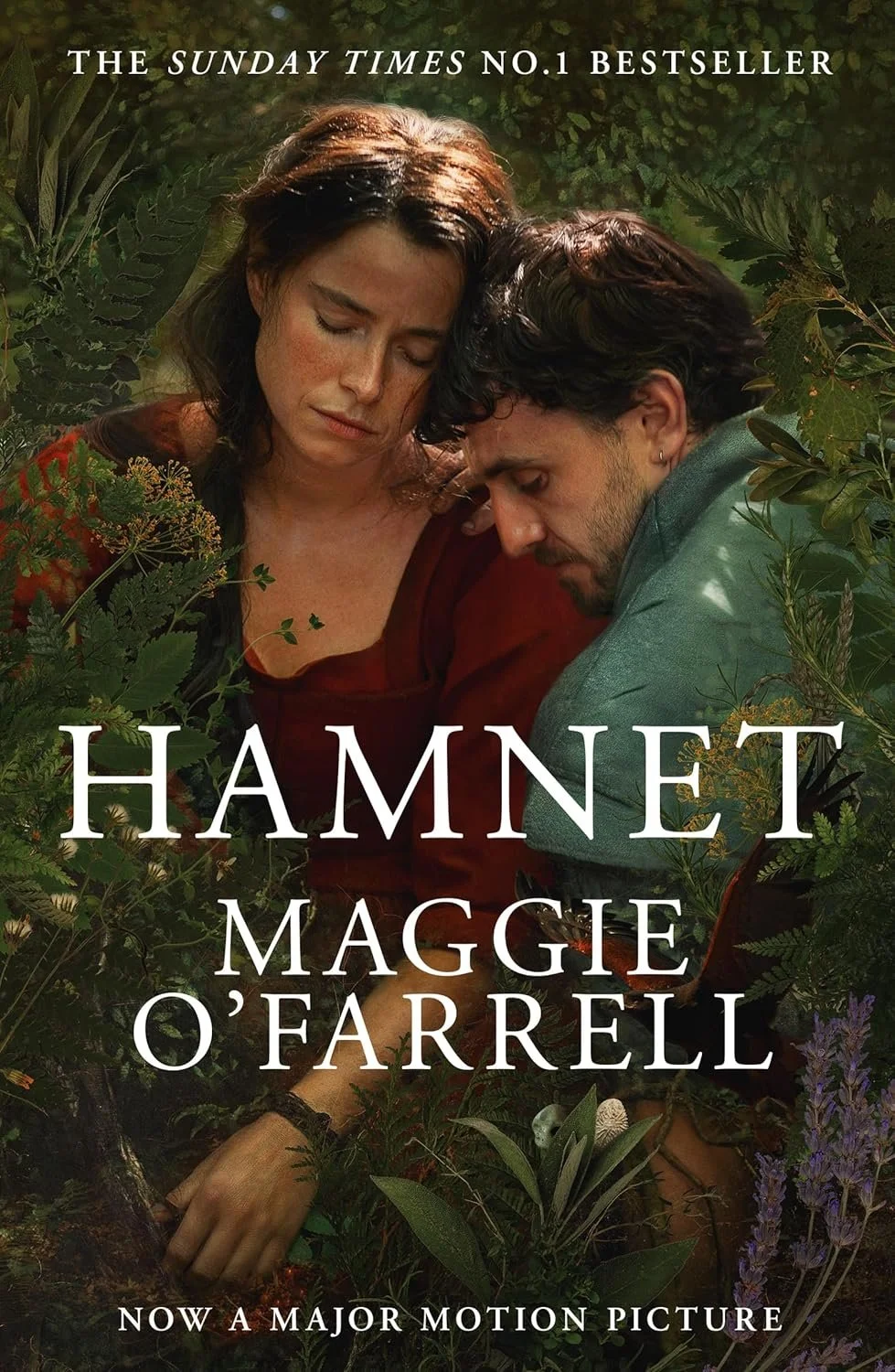
CLICK TO BUY THIS EDITION
Watching Hamnet
So how was it? Remember, these are my thoughts on Hamnet!
Well, it was beautifully filmed, and I loved the setting which definitely had a flavour of Stratford-upon-Avon in Elizabethan times. It was actually filmed in Herefordshire and it looks amazing.
The story was very faithful to the book, except that - as is always the way - a lot of the scenes in the book were cut or changed a little. The thing is, in the book, a great deal of what we learn comes from the characters’ thoughts. In a film that obviously won’t work, so everything has to be explained in other ways. So the characters might say something out loud which sounds so much better when it’s in their head - a dawning realisation, for example. In that way, I think the book had the edge for sure.
But the film was - for me - a triumph. And the reason I know that is that, once again, I sobbed buckets!
The cast is amazing, and did really well. Especially the children. Little Judith and Hamnet were brilliant. Oh, Hamnet…
My God, that little boy can act. Hamnet is played by Jacobi Jupe, and he absolutely wrung every drop of emotion from me. What a little star he is! And what’s even lovelier is that his real-life older brother, Noah Jupe, plays Hamlet on stage in the film’s final scenes. Talented family!
Paul Mescal is wonderful as Shakespeare, and the supporting cast are excellent too.
But honestly, Jessie Buckley is incredible! (Should I say, BAFTA winning actress Jessie Buckley - well done, Jessie!) I’ve got everything crossed that she also wins the Oscar. She carried me along with her every step of the way. I loved Agnes Shakespeare so much and I rooted for her throughout the film, while mopping up my tears. By the time we got to the final scene I was already an emotional wreck but…
This was the scene that was roundly criticised by the two people I mentioned earlier, so I was prepared for the worst. Agnes has travelled to London to see the play Hamlet on stage. Her husband doesn’t know she’s there. She has no idea what Hamlet is about. She only knows that Will has used their dead son’s name as the title of his play, and she can’t understand why he would do that, or believe he could be so cruel and thoughtless. He hasn’t even told her. She finds out from her horrible stepmother of all people! So of course, she’s determined to see the play and then tell Will he need never come back to Stratford. They’re done.
In the book, all her thoughts are just that. Thoughts. In the film, of course, she has to say some of the crucial things out loud, which in a way does dilute the effect. And the final line in the book isn’t the final line in the film. In fact, it goes on for a little while longer, and when I first realised that was about to happen my heart sank. Were the two ‘critics’ right? How bad was this going to get?
But in fact, when the scene played out as they’d said it would, I realised that when I was actually seeing it with my own eyes, it did make sense, and in fact it was rather beautiful. And the end of the film - although not in the book - was enough to have me crying all over again. I know! Honestly, I loved it. I will definitely watch it again and again.
Related viewing: Our Visit to Shakespeare’s Birthplace
So overall, my view of Hamnet - both the book and the film - is that it’s an incredible story and I don’t think I’ve read or watched anything that’s moved me so much in years.
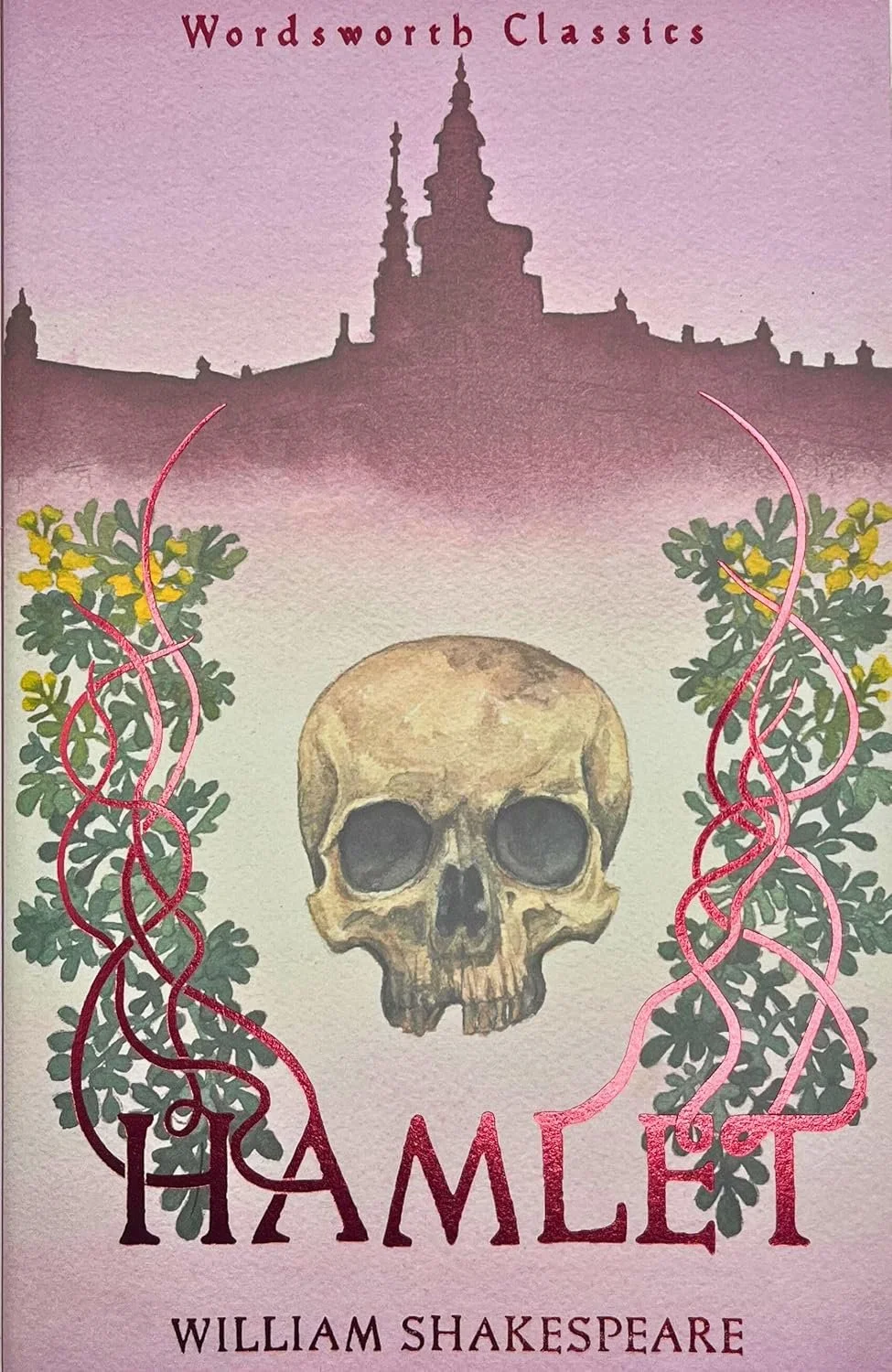
CLICK TO BUY
Final Thoughts
I saw an interview in The Times with Sir Ian McKellen recently in which he branded Hamnet as “improbable” and added, “I’m not very interested in trying to work out where Shakespeare’s imagination came from, but it certainly didn’t just come from family life.”
I’ve heard and read other criticisms that point out there’s no evidence for some of the things John Shakespeare (William’s father) did in the book and film, or that Anne Hathaway (later Shakespeare) was a wise woman, a herbalist, and had the gift of ‘the sight’, or that Hamlet was anything whatsoever to do with the death of Hamnet - even though Hamlet and Hamnet were interchangeable names in Elizabethan England and Hamlet was written less than four years after Shakespeare’s son’s death.
All this is perfectly true. But that’s surely what writers do? Sir Ian is saying that Shakespeare’s play was down to imagination, and not just from facts of his own life. Well, Maggie O’Farrell’s work comes from her imagination, and like many writers she takes the few facts that we do know and weaves a story around them. That’s why it’s a work of fiction, not a biography!
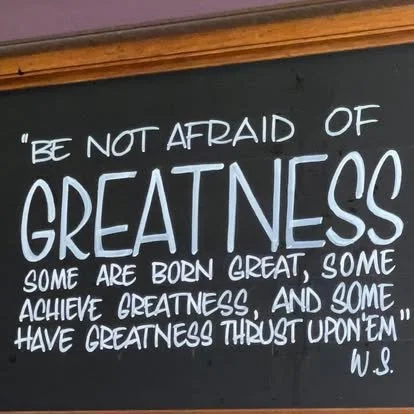
Love this, although ironically it’s from Twelfth Night which I didn’t really love much at all!
When I think about it, I do feel that it can’t just be a coincidence that Shakespeare used his son’s name in a play like that. There were loads of names he could have chosen, and he must have known the effect it would have on his family - and how it would affect him. So I wouldn’t be surprised if that was a deliberate choice, especially given one of the themes of the play.
As for the other things - well, we do know John Shakespeare was a bit of a rogue, involved in illegal money-lending and wool-dealing activities. Who knows what else he was capable of? Not that I’m saying he was the abusive father of the book and film. Truth is, we just don’t know.
But look, what I do know is that anything that makes people think about Shakespeare is a good thing. Anything that makes him seem more real, more human, more accessible is important.
And anything that makes us think about the wife we know existed, but have learned so little about, not to mention the children created from that marriage, has to matter. As Jessie Buckley said in her BAFTA acceptance speech:
'Maggie O'Farrell thank you for this role. You brought the mother out of the shadows and stood her next to that absolute giant that is Shakespeare.'
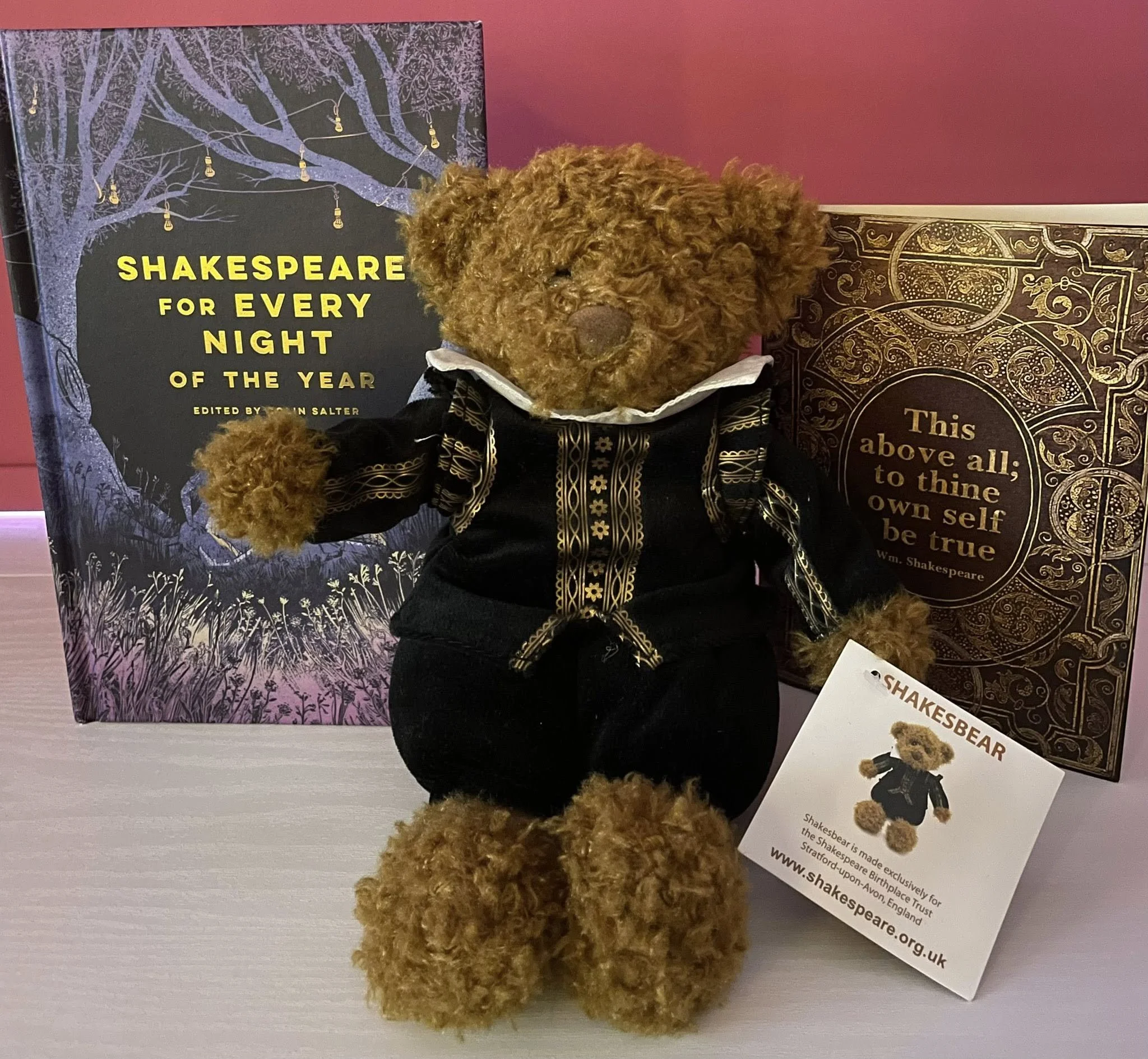
My little Shakesbear!
So I’d say, read the book. Watch the film. You might like it. You might not. You might be completely unmoved. You might, like me, love it passionately, even as it devastates you.
Just don’t make my mistake and think it won’t be for you because it will too “highbrow”. It’s not, trust me. At its heart it’s about life, love, grief and hope. We can surely all relate to this story, one way or another.
Oh, and it’s beautiful.
Happy reading!