My Thoughts on The Other Bennet Sister
Easter weekend was the time I chose to finally sit down and watch the first episode of The Other Bennet Sister on BBC iPlayer. I’d seen it advertised for what felt like forever, and I knew it had already started on BBC1, but to be honest, I wasn’t in any rush to watch it. I had a lot on my mind and I didn’t feel as if a Pride and Prejudice spin-off was going to cut it for me.
But when I’d done my daily writing quota, read as much fiction as I could absorb, and bid farewell to The Husband who was heading off to his own job, I found myself sitting on the sofa feeling pretty low and at a loss as to what to do with myself.
You know those times when you really don’t know what it is you want? When you feel like you should be doing something but can’t think what it is? When you don’t even have the energy to read? When nothing on the television is grabbing your attention or sounds remotely appealing?
It was one of those evenings, and even browsing YouTube wasn’t helping. In fact, I ended up deliberately coming off YouTube because I know all too well that hours can pass by while I flick through various videos that only end up making me feel even more fed up or absolutely petrified. There’s only so much bad news I can take, and there are only so many scary “look how big space really is” videos, or “time isn’t real and we’re all living in a giant computer simulation” sermons that I can cope with.
I couldn’t turn to the fun world of Scrubs, or the wicked though undeniable charms of Tommy Shelby in Peaky Blinders, because I’m doing a mammoth rewatch of both those series with The Husband, so it wouldn’t be fair to watch some episodes without him. Besides, I’d only have to watch them again when he got home.
So what to do…?
And then, flicking over to BBC iPlayer, I saw the trailer for The Other Bennet Sister again, and I thought, Oh what the heck? Why not?
I decided to give it a go. Just one episode. If it didn’t grab me there was nothing lost. Each episode is only half an hour long, after all, and I could always try again when my mood was better.
And so I pressed ‘play’ and settled down to watch…
WARNING: CONTAINS SPOILERS FOR THE OTHER BENNET SISTER!
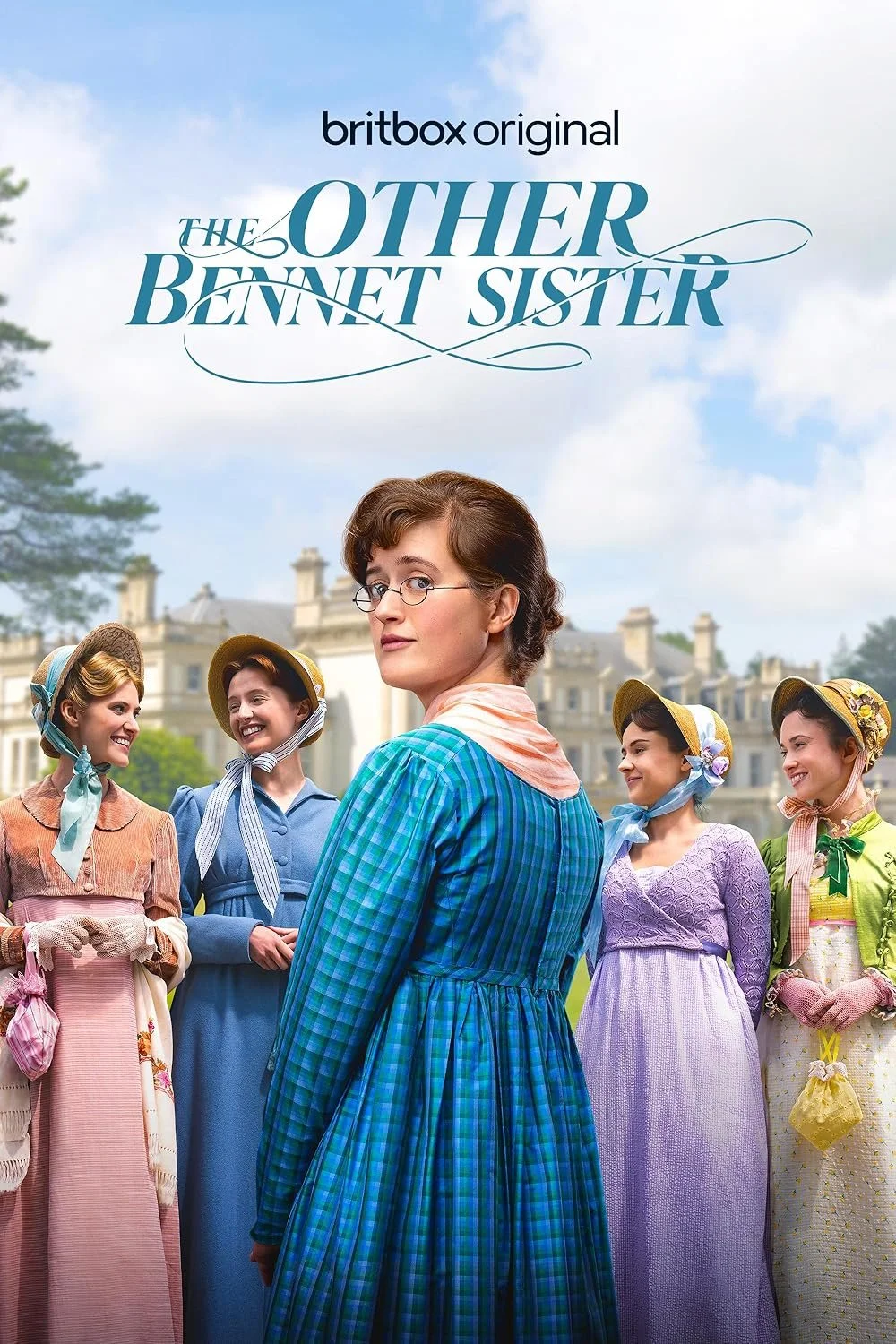
Available on BBC iPlayer and BritBox
I’m so glad I did. Because it feels to me like all my world-weariness, the sadness, and the background uneasiness that I never want to call fear (even though how can it be anything else, given the circumstances we’re currently living in?) and the endless boredom and inner restlessness - that’s really about the fact that life is so bloody scary and confusing right now that of course our minds are totally unable to settle to anything - all floated away while I watched that first episode.
I found myself laughing and crying, completely falling in love with Mary Bennet, willing her to find her way in the world and achieve the happy ending she so clearly deserved.
I watched the first six episodes in one evening, and the final four the following afternoon, and it was everything I’d wanted it to be and more.
As any fan of Jane Austen’s Pride and Prejudice will recall, Mary is the middle Bennet sister, and she’s often overlooked by her siblings and her parents. She’s the bookworm. The plain one. The one who finds solace in learning.
In the 1995 BBC adaptation of Pride and Prejudice, she was often the butt of the joke. In the book, too, Mary comes across as rather silly and conceited. She definitely has grander opinions of her musical abilities than she should have, and she does have a tendency to act superior - clearly looking down on her rather stupid younger sisters (though sometimes that’s understandable.) She is easy to dismiss or dislike, and I’ll admit that I have done both in the past.
In this adaptation, though, we see the other side of Mary, and get to understand what it’s like for her, and how life plays out from her perspective.

Mary is an introvert - many of us can relate to that feeling of being part of, yet apart from, the rest of the world…
Mary is, without doubt, the loner of the Bennet family. Where Jane and Lizzy confide in and console each other, and Kitty and Lydia giggle and plot together, Mary - the unpopular middle sibling - is alone with no one to talk to. Her mother is preoccupied with finding husbands for her daughters, and sadly she has little faith that she will be able to achieve that goal for Mary, so concentrates on securing matches for her sisters. Her father, meanwhile, makes fun of her, and clearly has no interest in or admiration for her. No one seems to have any time for Mary.
In The Other Bennet Sister, it’s true that Mary seems to have a slightly better relationship with her father, but the rest remains the same, and seeing her isolation from her perspective in The Other Bennet Sister, you realise that was true all along. Jane Austen made it so. You were just so caught up in what was happening with Lizzy and Darcy, and with Jane and Bingley, that you didn’t notice the loner in the shadows, except to roll your eyes and occasionally laugh at her.
In a way, Mary doesn’t help herself. She has decided that since she can’t be as beautiful and bright as her two older sisters, nor as lively and confident as her two younger ones, she will never marry, but will lose herself in her learning and books. It’s easy to feel frustrated with her, but then you remember how little choice young women had in that era, and I have to say my heart went out to her. If she truly believed she would never be wanted as a wife, then what choice did she have but to declare that she wasn’t interested in marriage anyway, and would be a happily single woman living for her books?
Mary says whatever pops into her head. She isn’t great on social etiquette and doesn’t have brilliant dress sense. She claims not to care if men won’t find her attractive if she wears spectacles - she’d much rather be able to see properly and read her precious books. (She does care! She’s just resigned to what she believes is the truth: that no man will ever want her anyway! And besides - books!) Mary feels deeply, but because she’s been hurt so many times she’s learned to tell herself that it doesn’t matter, that she just won’t feel any more and will instead concentrate on learning. And she really tries to make that happen, which just about broke my heart to watch, quite frankly. There’s a moment when she’s pulling at her thumbnail under the table that made me wince, and also made me want to hug her so tightly…
She’s not musical - however much she likes to believe she is. She’s socially awkward, can’t play games, doesn’t have the gift of small talk, and is resigned to a life in the shadow of her sisters.
Watching her in action and listening to her attempts at social discourse, I couldn’t help wondering if Mary was neurodivergent. But maybe that’s just me viewing her through twenty-first century eyes. I don’t know. What I do know is that Mary has her own charms, her own delights, and is a refreshing change from the dreary company of the eternally horrendous Miss Bingley, who dogs her every step in this story, just as she once dogged Elizabeth’s!
When Mary stops trying to say and do the right thing she flourishes. Her genuine desire to communicate with people - like Mr Collins and Mr Hurst - and her ability to discuss things with them that they themselves are interested in, means she becomes instantly likeable and attractive.
Witness the awkward dinner where Miss Bingley has bitchily ensured that poor Mary is sitting far away from the lively end of the table, seated next to Mr Hurst who does nothing but cough noisily, and has no interest in any of Mary’s suggestions for conversation.
Then she earnestly asks him what he likes. What interests him. Horses, he replies. Immediately, Mary begins to ask him about horses, and soon everyone’s heads are turning at the sound of her laughter, and Mr Hurst’s “hilarious” tales of racing and riding. Her joy is infectious and makes other people smile immediately.
Yeah, that kind of backfired on you, didn’t it, Caroline Bingley?
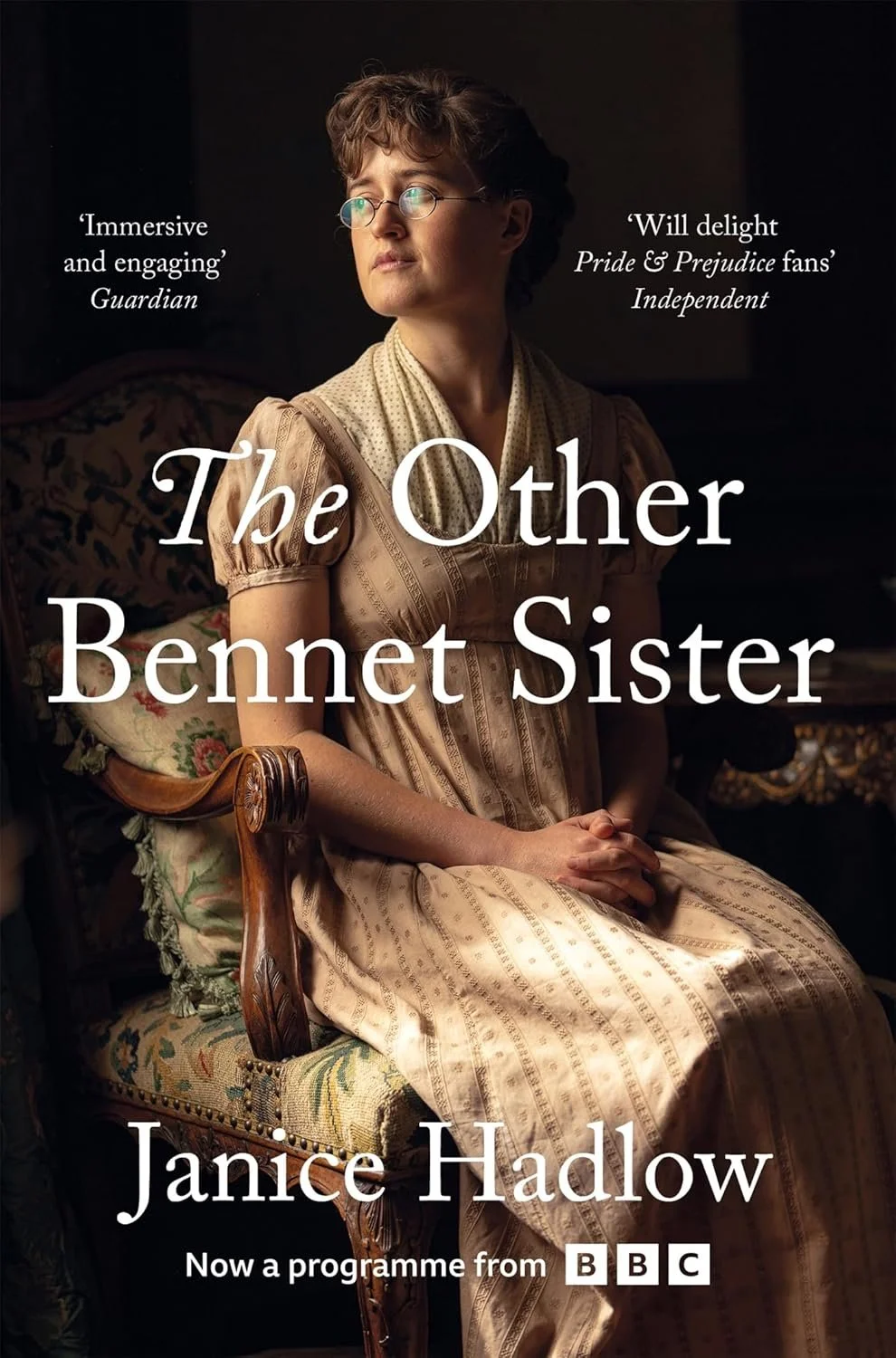
Click to buy the book
So what did I especially love about this adaptation?
I loved that people clearly fall in love with Mary for who she really is. When she stops trying to be something she isn’t, they warm to her. They find her funny, intelligent, different (in a good way) and wonderful to be around.
Her aunt and uncle clearly adore her. Her aunt, in particular, does all she can to protect Mary from her mother’s demands, and ensure Mary gets every opportunity to make a good life for herself.
Her young cousins take to her, too, when Mary becomes their governess. At first it’s all very awkward and Mary has no idea what she’s supposed to do with these children, but she works it out in the end, and the children grow to love her.
She makes a good friend in Ann Baxter. There’s no bitchiness or bad behaviour here. Ann clearly values Mary’s friendship and Mary is surprised to find she likes being around Ann!
She wins the heart of not just one, but two men - Tom Hayward and William Ryder. Yay! Go, Mary!
We get to see the Bennet sisters post-marriage. I found Darcy’s behaviour towards Mrs Bennet hilarious, and I also thought that Kitty has grown up a bit, while Lydia is as stupid and unkind as ever and seems to be getting the sort of marriage she deserves.
Mr Collins and Charlotte’s marriage is really interesting. I enjoyed that our sympathies were extended, in this adaptation, to Mr Collins. Who’d have thought that? He clearly doesn’t know how to make his wife happy, and she in turn seems to have no intention or interest in learning enough about him to transform their relationship. It’s thought-provoking to see how he reacts to Mary’s genuine kindness and interest in him. His response is heartwarming, and I thought it a shame that Charlotte can’t or won’t attempt to reach him in the same way. Given how Charlotte betrayed Mary, though, maybe that’s all she deserved - although you have to accept the fact that Charlotte was caught in the battle to find a husband, too, and maybe all’s fair in love and war!
I really loved the fact that Lizzy comes through for Mary. I was a bit worried at first, but it was wonderful to see her defending her younger sister, working behind the scenes to ensure that Mary found a way out of her mother’s grasp, and listening to her sister’s worries, offering her encouragement and reassurance, and telling her how proud she is of her.
Lucy Briers playing Hill! In the 1995 BBC adaptation of Pride and Prejudice, Lucy played Mary herself. Now she’s back playing the family’s faithful servant, and I got quite a lump in my throat watching her interactions with this lonely Bennet sister. Hill seems to understand and care for Mary, offering her sage advice and plenty of comfort. At the end, it’s Hill that Mary sends a piece of her wedding cake to! I wondered how it felt for Lucy to watch her old character flourish. It was perfect casting.
What didn’t I like?
There was actually very little I disliked about this production. A few people have commented that it seems to have been made cheaply but I really didn’t notice or care about that. If I had one criticism it’s this: I didn’t like the way Mrs Bennet was portrayed.
I’ve said in a previous post that I have sympathy for this character. She has five daughters and their estate is entailed. When her husband dies, she and they will be entirely dependant on the generosity of family if she can’t secure suitable marriages for all her offspring. Mr Bennet offers little to no help in this matter, seeming to believe it’s not his problem because he’ll be dead. Of course his poor wife is desperate to find their girls husbands!
Related Reading: Six Books to Read for Mother’s Day
Her desperation comes across quite clearly in both the original book of Pride and Prejudice and the 1995 television adaptation. What never came across was Mrs Bennet being deliberately cruel. Thoughtless, yes. Self-centred, driven, single-minded, yes. Rather silly, yes. But cruel?
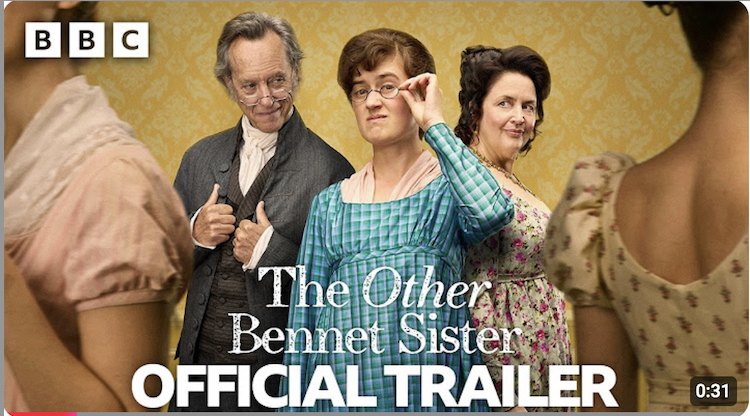
Watch the official trailer on YouTube!
The way she was portrayed in this adaptation was as someone cruel. Mrs Bennet (played by the lovely Ruth Jones) is selfish and mean. She clearly has no time for or interest in Mary. She takes every opportunity to criticise and mock her, and deliberately sabotages her chances - first with Mr Sparrow who she deems not good enough - and then with Mr Collins, despite Mary making it very plain that she would be happy to accept his proposal should he offer.
After Mrs Bennet is left a widow, she decides she wants rid of Mary, since she will be happily ensconced at Netherfield Park with Jane and Bingley. She receives a request from her sister-in-law, Mrs Gardiner, who would like Mary to become a temporary governess to her children in London. Mrs Bennet accepts on Mary’s behalf without even consulting her, and overrules her when she pleads not to be sent away. Then, just as Mary is finally happy and settled at the Gardiners, she insists that her daughter come to Pemberley to stay with her as she is unwell and needs her there as a companion - and to walk her new dog!
What Mary wants never comes into it. It’s only because of the persistence of Mary’s sisters (except Lydia) and Mr and Mrs Gardiner that Mary finds the strength to disobey her mother’s wishes and the courage to do what she wants to do.
It just didn’t sit right with me, and even though there was a brief moment when Mrs Bennet tried to explain her reasons for behaving the way she did, it didn’t feel like enough. She was cold and cruel, and behaved more like Cinderella’s evil stepmother than the nervy Mrs Bennet we know and love in Pride and Prejudice.
However, I recently watched an interview with Ella Bruccoleri, which made me look at it another way. Ella plays Mary, and she explained that what we’re seeing is Mrs Bennet very much from Mary’s own perspective. Mary’s mother, after all, isn’t the same as Lizzy’s mother, or Jane’s mother, even though they’re the same woman.
I totally understand that. We are all different versions of ourselves to different people, and Mary’s siblings’ experiences with their mother were very unlike Mary’s. Mary herself points this out in an impassioned speech to a rather startled Lizzy. So naturally, since we’re viewing the character of Mrs Bennet through Mary’s eyes she will be different to how we view her through Lizzy’s in Pride and Prejudice. It does make sense.
Putting that aside, what I haven’t really mentioned much until now is the romance in this story. Oh well! That’s just perfect. It’s very much a will-they, won’t-they? and a who-is-it-going-to-be? situation. I had an idea from the beginning who she’d end up with, but there were a few moments along the way when I wondered how it was going to turn out, and if I was going to be proved wrong. And then there was the emotion, and the heartbreak, and the joy, and the fun, and the loss, and the fear, and the final, perfect moment… Aw! It really was lovely, and I enjoyed it so much. I even ended up feeling quite sorry for Miss Bingley, and I actually had reason to thank her. Who’d have thought it?
We had some wonderful, heartwarming scenes at the Gardiners’ London home, some heart-in-the-mouth ones at Pemberley, some extraordinary, utterly wonderful scenes in the Lake District (the boat scene made me laugh out loud, whereas the one just before the storm was heartbreaking and frustrating!) and that proposal scene between Mary and her true love. Gulp!
Overall, The Other Bennet Sister was the most wonderful piece of storytelling I’ve seen in ages. It’s uplifting and life-affirming and reminded me, if I needed reminding, of how powerful stories really are. How they can take us out of our own lives and transport us to somewhere completely new, where we become absorbed in the life of strangers and learn how to care about them deeply in just a few short hours.
At times like the ones we’re living in right now, we need stories that help us escape, and stories that teach us empathy and compassion more than ever, don’t we?
It also made me realise how absolutely perfect we all are in our terribly imperfect ways. I’ve been struggling with the horrible Imposter Syndrome yet again, doubting myself, doubting my writing, doubting my career choices. The Other Bennet Sister made me look at things in a different way.
Related Reading: The Dreaded Imposter Syndrome
This story is for everyone who’s ever felt like an outsider. The odd one out. Who’s ever felt as if they don’t quite fit in. As if they’re - well - second best, somehow.
It shows us that we can’t all be Lizzys or Janes, but that’s okay. Many of us can be Mary Bennets who - when we find the right people who like us just as we are and love what we do - can thrive and flourish in our own way. We know who we are and we know what we want. We’re enough.
I should point out that I haven’t yet read The Other Bennet Sister, and I’ve heard that there are significant differences between the book and the television programme. But it doesn’t matter. I have bought the book and I’ll dive in as soon as I can. It’s a chunky monkey, though, and may take me a while!
Whatever the differences, it won’t alter the fact that this adaptation came at a perfect time for me, and gave me so much joy and happiness that I am grateful I found it.
Hopefully, I’ll love the book, too - whatever the differences. Double the pleasure!
Don’t you just love stories and the power of storytelling? I do. And given it’s my job, and my passion, maybe that’s all for the best…
Have a great week.