Book vs TV: The Other Bennet Sister
I’ve already written a post about how much I loved watching The Other Bennet Sister (available on BBC iPlayer and BritBox) but at the time I hadn’t read the book upon which it was based, written by Janice Hadlow.
This week I set out to remedy that, after watching the series for the sixth time at the weekend. (Yes, I know!) I wanted to know how similar to the original text the adaptation was, and if reading the book would alter my opinion about the series. Also, I was curious. I’d heard many people who’d read the book first say they didn’t approve of the adaptation. I’d also heard some people say that the book was a disappointment after they’d watched the series.
It intrigued me to know which camp I’d fall into, and I admit I was also excited to re-enter the world of Tom and Mary and see them play out new scenes together in my imagination - fuelled by the images and voices I was already so familiar with.
WARNING: MAJOR SPOILERS FOR THE OTHER BENNET SISTER BOOK AND TV ADAPTATION AHEAD!
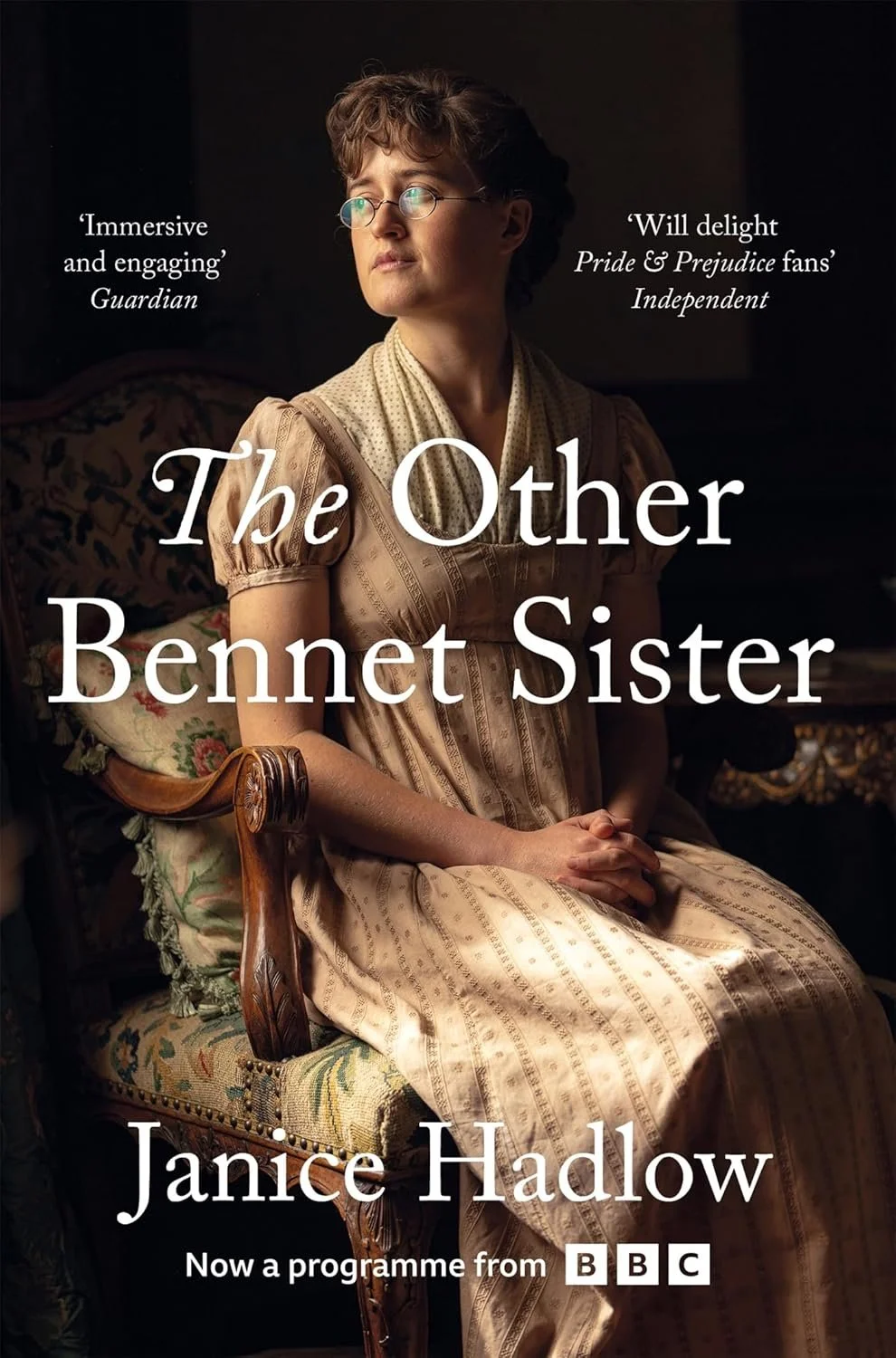
The book is a hefty tome, but every page is a delight!
Where I love the book best:
The events of Pride and Prejudice. I think these are very well told in the book. There’s a good balance between the story we know and love, as told from Lizzy’s point of view, and the other angle we’re presented with as seen by Mary. This is a long book, but the writing is light and the chapters are short so it’s an easy read, and I felt Janice Hadlow captured Jane Austen’s tone really well.
Mary’s feelings. I understood them even more than I did in the adaptation. There’s so much more to her guilt over Mr Sparrow, for instance. She clearly had hopes of him, which doesn’t come across as strongly onscreen. She carries that grief and guilt with her for a long time. I noticed that, whereas on screen Mary would pull at her nail or scratch her skin in times of overwhelming stress or unhappiness, she doesn’t do anything like that in the book. Even so, I feel that, although the adaptation showed us a very low and unhappy Mary, it doesn’t go as deep into that as it does in the book. Despite her not using those coping strategies on the page, I got a much stronger sense of how little Mary thinks of herself, how utterly sad she is, how lost she feels, and how much she needs someone - anyone - to love her and approve of her.
Mary and Mr Bennet. One of the saddest parts of the story for me is when Mary notices how close her father is to Lizzy. His library is sacrosanct and permission must be sought by anyone wishing to use it. Mary has to pluck up courage to visit it, even though she is a real booklover and desperately wants to read. Mr Bennet agrees she can stay as long as she doesn’t disturb him or bother him in any way. Yet Lizzy often drops into the library, and their father doesn’t seem to object at all when she chats to him. In fact, watching them together, Mary has a painful realisation that her father has never looked at her the way he looks at Lizzy, and that he doesn’t find his middle daughter at all interesting.
She decides to do something to win his approval. She’ll make a book for him, full of special quotes from the books she has been reading. She’s sure he’ll love that. She buys good quality paper, a leather journal and beautiful inks and spends ages working every day to create something exceptional and meaningful. She’s looking forward so much to presenting it to him and seeing the look of pleasure and approval on his face.
But then she discovers that the authors from whose work she has chosen the quotes fill him with scorn. He has no time for them and doesn’t like their writing. All those beautifully decorated pages of quotes that she has laboured over for so long are useless. Mary shoves them in a drawer and Mr Bennet never knows how hard his middle daughter worked to win his approval, or how much she desperately needed him to show her that he cared.
I really felt for Mary here, and wish the scenes had been included in the adaptation. We saw a lot of her relationship with her mother and how let down Mary was by her, but I think her need for her father’s love was skipped over a bit, and that’s a shame.
The aftermath of Mr Bennet’s death. I enjoyed the second part of the book which isn’t covered in the television adaptation at all. After Mr Bennet dies, Mrs Bennet and Mary find themselves living at Netherfield Park with the Bingleys. Mr Bingley is, as ever, welcoming and kind, and Jane is warm and pleasant, but Mary feels awkward and in the way, particularly as the Hursts and Miss Caroline Bingley are frequent visitors to their home. Mary is subjected to a prolonged and intense bullying campaign by the latter, which isn’t easy to read about.
Before long, Mary’s nerves are so frayed that she realises she can’t bear to be at Netherfield Park any longer, and writes to Lizzy, asking her if she may visit her at Pemberley. Lizzy agrees and Mary is relieved to leave the Bingleys behind, setting off with high hopes of a more restful and pleasant place to stay. At Pemberley, Mary wishes to put the past behind them and forge a new relationship with Lizzy. As I’ll explain later that doesn’t go according to plan.
Next she travels back to Longbourn, to stay with Charlotte and Mr Collins and their baby son, William. I really enjoyed this part of the book. Seeing the Collins at home in Mary’s old home and watching them in their day-to-day interactions was fascinating. Charlotte is pleased to see her and both make her welcome. It’s not long before Mary realises that this is not a happy marriage. Although, on the surface, Charlotte is polite and courteous to her husband, and takes great care to ensure his every material need is met and his household is running smoothly, she gives him no affection, and actively avoids any physical contact with him - even moving her hand before he can lay his upon it. Mary comes to realise that it’s Mr Collins who is suffering more than his wife.
In the adaptation, there’s a scene at Pemberley where Mary and Mr Collins discuss happiness, and how it might be obtained. In the book, this scene takes place at Longbourn in Mr Collins’ own home, and he and Mary begin to spend a lot of time together in the library where she once sat in silence with her father. Initially, Mr Collins requests peace so he may work, but then he asks her what she is reading and they begin to discuss books and philosophy. Mr Collins is delighted by Mary’s mind and offers to teach her Greek. The two of them strike up a friendship. In time, Mr Collins suffers regret for the poor choice he made on his first visit to Longbourn.
Charlotte sees this blossoming relationship and is unhappy. It stirs her to make an effort with her husband and things between the two improve. But it’s clear that Mary is in the way and Charlotte isn’t happy for her to stay.
Tom’s poetry reading. Tom invites Mary to join him on Westminster Bridge early one morning. Mr Gardiner accompanies her and waits by the carriage, while Mary and Tom stand on the bridge and he recites the poem, Composed upon Westminster Bridge, Sept 3, 1802. This seems so romantic and so appropriate, rather than have him recite it in a secret garden somewhere.
Mary’s grasp of poetry. Mary has a moment of clarity when she’s reading Tintern Abbey and comes to understand its meaning without Tom’s help, and it’s wonderful to see her expression as the mists of confusion roll away and understanding breaks through like sunshine. At last, she knows what Wordsworth was trying to say, and she is so moved and excited by it, and can’t wait to tell Mr Hayward of her breakthrough.
Tom’s work life. In the book we hear a lot more about Tom’s work than we do in the adaptation. He is a hard-working and respected lawyer, and as the younger son of a man whose estate was left entirely to his older half-brother, he has had to make his own way in the world - something he always knew and accepted with grace and dignity.
Mary and Mr Ryder meet. Mary meets Mr Ryder at the Vauxhall - a Regency pleasure garden where she, Mr Hayward and the Gardiners have gone to see the illuminations, circus acts and other entertainment as an evening treat. By this stage, she and Tom have become very good friends and Mary has developed deep feelings towards him. He is good-humoured and witty, kind and easy to be around. They are having a lovely evening when Ryder approaches them and Tom introduces him as a friend of his. Unfortunately, Ryder is accompanied by the Hursts and Miss Caroline Bingley…
Miss Bingley’s “rehabilitation”? Talking of Miss Bingley, she’s vile in both book and adaptation, but at the end of the television series they do try to rehabilitate her somewhat. Mr Hayward tells Mary, ‘She did a good thing.’ In the book, Caroline may have done a good thing, but it’s very obvious to both Mary and Tom, as well as to the reader, that she did it out of malice, and not with good intentions at all. She brought the couple together despite her efforts, not because of them. Given the way she’s behaved both throughout Pride and Prejudice and The Other Bennet Sister, I’m glad that Mary and Tom weren’t deceived.
Mary can’t contact Tom. In the TV series, after Tom leaves her, Mary writes to him several times, but her letters are returned as he is no longer at that address and they have no forwarding address to send them to. In the book, it’s made clear that Mary can’t write to Tom because it’s just not done in Regency times for a woman to be so forward. If there’s to be any approach it must come from the man. Mary’s hands are tied and she has to sit and wait for a word from him. So frustrating for her, but it felt more authentic to me.
The separation. When Mr Hayward vanishes after the Lake District holiday, Mary pines. I mean, she really, really pines. It’s agony to read how much she misses him, and we get far more of a sense of this than we do in the series. Of course, onscreen Mary has Miss Baxter as a friend to comfort her, as well as plans to become a governess. In fact, she actually does become a governess, teaching older pupils her speciality subjects. But book Mary has no Miss Baxter, and she has no desire whatsoever to be a governess. With nothing much to distract her she aches for Mr Hayward. Although I felt terribly sorry for her, it was gratifying to read how much she loved and missed him. Similarly, when he finally returns, we learn that he has lost weight and looks drawn and unhappy. Their separation has clearly taken its toll on them both, which probably isn’t very politically correct these days but when you’re reading a Regency set romance it’s what you want to see!
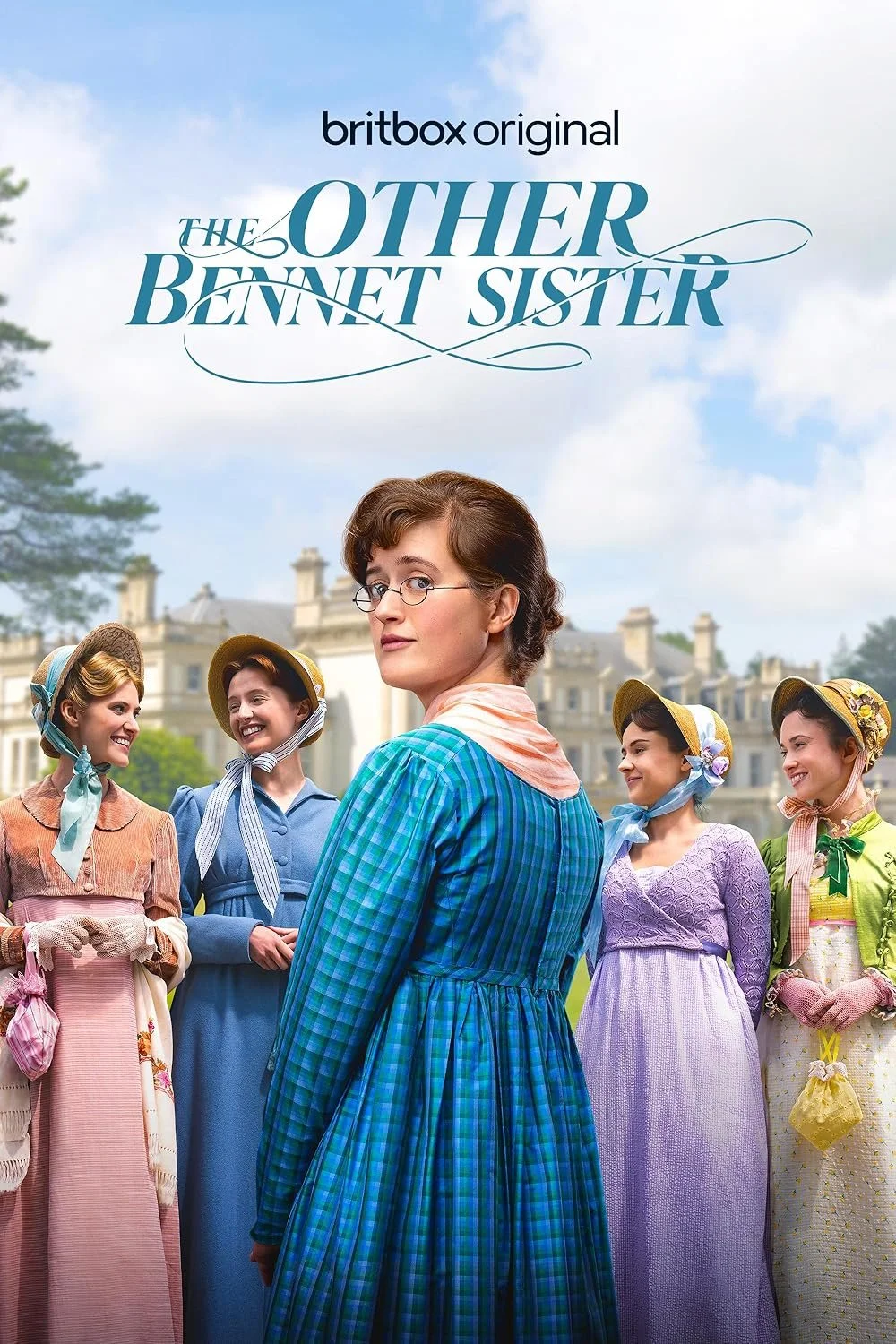
The TV adaptation was warm, funny, and romantic. I loved it.
Where I prefer the TV adaptation:
The Bennet Sisters. I loved getting to know the Bennet sisters onscreen. After the first section at Longbourn, we don’t see Lydia and Kitty at all in the book. Jane appears only briefly and Lizzy isn’t present for much more of the story. In the adaptation I felt the sisters brought a lightness and warmth and plenty of humour. Lydia, as awful as she is, was such fun to watch, and I did miss her in the book. The relationship between Lizzy and Mary is nowhere near as warm in the pages as it appears on the television. Although Lizzy is Mary’s favourite sister, she feels very let down by her. In the book, After Mr Bennet dies and Mary spends time at Pemberley, it looks as if she and Lizzy will rebuild their relationship, but when Mr Darcy returns with his sister, Georgiana, Mary is pushed out. Mr Darcy clearly hasn’t taken to her, and as Lizzy is fond of Georgiana, Mary soon realises that she is in the way. This is disappointing. Lizzy clearly feels guilty later because she is the one who pays for Mary’s dresses in London, but even so there’s a kindness and affection that comes across so well onscreen and is sorely missed on the page.
Mr Ryder’s visit to Pemberley. This doesn’t happen in the book, and her sisters never meet him. Mrs Bennet actually meets him for the only time at the Gardiners’ house. I loved the scenes at Pemberley, with Lydia’s disbelief that someone like William Ryder would be so enchanted by someone like Mary, Mrs Bennet’s excitement upon hearing him speak of his aunt, Lady Catherine de Bourgh, and the warm encouragement of Lizzy. The scene on the horse was both hilariously funny (Mary trying desperately to haul her horse’s head up and make him go where she wished) and poignant (Ryder quoting poetry at her and the look of admiration and total acceptance for her on his face).
The Bennet disapproval of the Collins couple. The disappointed and disparaging mutterings of‘Ugh!’and ‘Oh no!’every time the door opens and Mr and Mrs Collins enter the room.
Mr Darcy’s obvious distaste for all things Bennet and Collins! Mr Darcy may love Lizzy but he’s clearly not so keen on her mother and sisters. He actively avoids them as much as he can, walking in and straight out of a room where they’ve gathered without a word. When Lizzy urges Mr Collins to come into the room where the Bennets and Darcy are sitting, her husband slides down in a chair and hides his face behind a newspaper! His antisocial behaviour extends to Mr Ryder. The evening he arrives Darcy feigns a ‘seasonal headache’ to get out of having dinner with them all - although it may be that it’s Lizzy’s mother and sisters and Mr and Mrs Collins he can’t face, rather than Ryder (who he must know of if they are both nephews of Lady Catherine?). He also sends Mrs Bennet to London to see a specialist for her nerves and urges her to stay as long as necessary and to think of her nerves. Clever! In the book it’s not so obvious, although we do realise he has no taste for Mary’s company at all.
Tom’s Yorkshire accent. Now, I may be a bit biased, but I loved the fact that Mr Hayward was a Yorkshireman (and I think Irishman Donal Finn’s accent is brilliant, by the way). In the book there is no mention of Yorkshire at all. So sad!
Mr Ryder and Mary dancing. The ballroom scene with Mr Ryder and Mary is joyous. At first she seems reluctant to dance with him, but he coaxes her out of herself by asking her about her guilty reading secrets. She confesses she loves to read true life crime and that she has to hide the pamphlets from her mother. The two end up laughing and teasing each other like old friends as they dance, to the extent that people watching them comment on their behaviour. Tom, meanwhile, is trying hard not to look jealous! (Compare this scene to the one where Tom and Mary dance together. It’s very different!)
The fishing scene in the Lakes. I loved the way this played out onscreen. The Gardiners, Tom and Mary are so at ease in each other’s company - although I should say here that in fact, Tom and Mary are exceptionally at ease in each other’s company in the book, and there is definitely an expectation that a proposal can’t be far away. But there’s no fishing scene, sadly - or if there is it’s so subtle I don’t remember it.
The artwork. Mary’s attempts at drawing were fairly passable, but Tom’s were appalling! It was so funny seeing the drawings of a three-legged duck with both a beak and a mouth. Impossible really to capture the hilarity in a book.
The bird impressions. I cried with laughing at these. I don’t know how the actors got through them. There must have been many outtakes, surely? Tom’s assertion that perhaps the birds sounded differently up there, and that the only bird he was totally confident of impersonating was the London pigeon.
The boat scene. Ah! The boat scene… It doesn’t happen in the book and what a loss that is. From start to finish it’s magical. Tom sitting back to gaze adoringly at Mary as she struggles to read poetry, then gently but passionately finishing the poem for her, his heart clearly filling with joy as she comes to understand the meaning behind it. Their affectionate talk where Tom tries to build up to proposing to her, and then the calamitous arrival of Mr Ryder, Tom being pulled overboard, hauling the boat back to shore with Mary sitting back and beaming smugly like the Queen of Sheba while two hunky men carry her to safety. Perfect!
Ryder always being in the way. Mr Hayward’s muttered asides about Ryder are hilarious. ‘Him!’ when Mary confesses she went riding with Mr Ryder at Pemberley. ‘Give me strength,’ when Ryder joins him and Mary as they warm up before their mountain hike, and the incredulous, ‘It’s not urgent?’ after Ryder has tipped him into the water, all because he couldn’t wait another minute to discuss “urgent” business. So funny!
The warming up scene. As the group get ready to climb Scaffel Pike, Mary ventures outside to begin limbering up in preparation. Mr Hayward comes out and joins her. Unfortunately, they’re quickly joined by Ryder, who asks Tom if they can discuss important business while they’re climbing the mountain. As the two men ‘warm up’ in front of Mary, it becomes increasingly obvious that they’re competing for her admiration. Their leg kicks and lunges become increasingly frantic and hilarious to watch. Meanwhile, Miss Caroline Bingley is watching in amazement, but desperate to please Mr Ryder she attempts to warm up, too, only she’s far too ladylike to go on with it and her look of disgust and dismissive flick of the wrists as she waves the whole process goodbye is a joy to behold.
The primrose. Tom presents Mary with a honeysuckle as they climb Scaffel Pike, but within seconds Ryder has caught up with them and presents her (and Caroline Bingley) with a primrose each. Their guide tells them that the first person to eat a primrose will be the first to marry. They all awkwardly laugh this off but Caroline turns away and stuffs the primrose in her mouth! I also love the moment when, after Mary has told them a fact about primroses, Ryder tells her she always makes him see the world in a different light and an embarrassed Mary says, ‘Aw.’ Tom immediately adds a sarcastic, ‘Awww…’ but the look on his face is priceless!
The storm. The rain. The horrific journey down the mountain. Caroline’s accident. Mr Hayward passionately telling Mary, ‘Do you know how I would feel if anything were to happen to you?’ Mary’s realisation that she has made a huge mistake siding with Ryder - (in the book she realises that Tom has been far more deeply wounded by her choosing Ryder’s advice over his in this matter than she could ever have imagined, which was something I liked) and Miss Bingley slapping Mary on the head as the poor girl tries to free her nemesis in pouring rain.
Mary’s illness. There is no illness after the storm in the book, depriving us of the moment when Tom picks Mary up and carries her into the inn. It also deprives us of the sight of his fear for her, his refusal to leave her, his going without sleep while he waits outside her room for news of her health, his sheer relief when he learns she is going to be okay. And finally, the realisation that he must leave her. We see him mount his horse and ride away. In the book, Mary is perfectly well, and she learns that Mr Hayward has left when he doesn’t come down for breakfast. Still devastating for her, but not as romantic for us!
The yearning. Oh my word - the yearning! You can see it in his eyes. Every time he looks at her it’s so obvious that he wants to tell her how he feels but he’s unable to - because of his understanding with Anne Baxter, because of the societal pressures and etiquette of Regency England, and because of his own fear that she will tell him there is no hope - her heart belongs to Ryder. When they dance together he can’t take his eyes off her - in fact, he misses his cue because he’s so fixated by her. It’s absolutely beautiful to see and made me fall in love with Tom Hayward completely.

They’re a match made in heaven either way!
Where I can’t choose:
Tom and Mary’s meeting. Unlike in the adaptation, Mary isn’t the the Gardiner children’s governess but a guest in her aunt and uncle’s house, and therefore there’s no scene with her boring the children to sleep with her lessons, or spinning that globe right before the future love of her life walks through the nursery door. I did love that scene, but I also loved the way she meets Mr Hayward in the book. Tom is not at the Gardiners’ home, but at Harding and Howell, a huge and stunning department store where Mrs Gardiner has taken Mary to buy new clothes. Tom helps Mary choose between two dresses, explaining that he has four older sisters so has a lot of experience when it comes to dresses and material! He invites them to have a toasted teacake with him in the store’s refreshment room while Mary decides if she agrees with his opinion that the green and gold would suit her best.
Tom’s personality. In those few paragraphs we see immediately a livelier, more outgoing version of Tom than we meet onscreen. He seems far more confident than the diffident young man we see in the adaptation. He’s described as being tall and broad-shouldered with a shock of dark hair, and although he’s not considered conventionally handsome, he’s so affable that no one really notices. It was refreshing to see how easily he and Mary connected, and I enjoyed their conversations and banter, but I also loved the shyer, more uncertain man that we see in the TV adaptation. Although book Mrs Gardiner insists that Tom’s lively and humorous nature hides a serious and responsible man, it’s a very different introduction to the character. I’m honestly not sure which I prefer and I’m glad I have both versions and can combine the two!
Miss Baxter. There is no Miss Baxter in the book, and no engagement or ‘understanding’. Tom is a free agent, which does change the dynamic of their relationship. I like that, in the sense that it does clear the path for Mary, and frees Tom to be more genuine and honest with her. However, I can also appreciate that there is more conflict in the adaptation, and his unavailability, as well his basic decency and sense of honour does give rise to all those yearning looks! I also missed Miss Baxter. I thought she was a lovely friend for Mary and it was good to see a genuine friendship between women with no bitchiness or oneupmanship.
Mary’s fashion sense. While screen Mary chooses bright and bold colours for her dresses, book Mary is much more conventional. She goes for paler, more delicate colours - a pale pink, a cream, a yellow and white stripe, a lavender, and a green and gold (recommended by Mr Hayward). I do think the new dresses she wore on screen were hideous, so it was a relief to read her book choices. Thinking about it later, though, I realised that those bold colours were Mary’s way of striking out on her own, going against everything her mother had told her she must do, and were part of the process of her becoming her own woman. Put like that I’m not sure which I prefer!
Poetry. In both versions, Mr Hayward lives and breathes poetry - particularly Wordsworth - and in the book he also submits reviews to magazines. He is staggered to learn that Mary doesn’t read poetry, and decides for her own sake she must learn to love it. Whereas in the adaptation he brings Lyrical Ballads to the Gardiners’ house for Mrs Gardiner to read and is shocked at Mary’s confession that she doesn’t like it, in the book the two of them make a pact at the Gardiners’ first dinner party. Mary will read the poetry that Tom chooses for her (Lyrical Ballads) if Tom will read a more serious tome that she selects for him. She chooses to give him Mrs Macauley’s History of England - naturally. I liked the idea of the pact, which was made because Tom and Mary already had such an easy and enthusiastic relationship. Both of them cared enough about the other to want them to share in their favourite books, so I loved reading that. However, I also loved the scene in the TV adaptation where Tom catches Mary playing graces and hands her the book, telling her that this will be the book that opens the heart of Miss Mary Bennet. So romantic! And of course, there are the forearms… Sigh. Mary’s turn to yearn!
The proposal! In the book, Tom arrives at the Gardiners’ home after a protracted (and deeply painful to them both) absence. She keeps him waiting as she needs to gather herself after the shock of his unexpected arrival. Mrs Gardiner (who has previously urged Mary to consider Mr Ryder’s proposal as, although she hopes for it, she can’t be certain Tom will return to London) begs her not to let her anger at his disappearance ruin things between them, but to hear him out. As soon as Mary sees how unhappy and drawn he looks, she falters, and on hearing his voice she almost loses her self-control, but somehow she manages to retain her dignity. It is Mary who insists on speaking first, and she tells him how she has viewed their relationship, how his desertion hurt her, and then confesses that she loves him. Tom is quick to reassure her that he loves her, too, and asks her to be his wife. It’s a very emotional and beautiful scene, and also quite revealing. Assured of her love and her acceptance of his proposal, Tom proceeds to explain that he has been in Hampshire at his family home, and that Ryder’s unexpected good fortune was the reason for his flight. He believed that Mary deserved better than he could give her. In the TV adaptation, it’s a similar conversation but played out in a pretty garden. I loved Mary’s indignation, her cry of ‘Yorkshire!’ (Sorry, but it sounds much better than Hampshire!) and the way she slapped his arm for leaving her. What I really loved about this scene is their physical emotion. Tom’s eyes welling with tears as he confesses he can’t give her what Ryder can, but that he can offer her his love and devotion. As a single tear rolls down his left cheek, a single tear rolls down her right cheek, as she finally understands how much he loves her. After she accepts his proposal they cling to each other, their faces showing their relief. It’s like they’ve fought a long, hard battle, and they’ve realised they’ve finally won.

What’s the verdict?
So - book or TV?
After all that, which did I prefer? Well, as you can probably see, I don’t really have any preference. I absolutely loved them both. Since I started writing this blog I’ve watched the adaptation yet again, and I have every intention of watching it regularly until I get heartily sick of it, at which point I will take a break and I’m confident that within a few weeks I’ll be yearning to watch it again! As for the book - despite its hefty size I flew through it, and I have no doubt that I’ll be reading it again in the near future.
The way I see it, the two complement each other beautifully. Watching the TV adaptation we can see the expressions, hear the little asides, ache at the yearning expressions on the characters’ faces, laugh at the drawings and bird calls!
Reading the book we can get inside Mary’s mind far more deeply, and understand what’s really going in her relationships with the people around her.
To my mind, the differences are understandable. Novelists have a different task to screenwriters, and I think both Janice Hadlow and Sarah Quintrell did an excellent job. Difficult choices were no doubt made in both cases, but the results were exceptional. It didn’t take much effort to get used to the changes. I don’t know if I’d have felt differently if I’d read the book first, but I don’t think so.
This is one of those rare occasions when I loved the adaptation as much as the original source, and I’m so pleased that I found this wonderful story. It will live with me for many years to come.
Which did you prefer, book or series? Or did you, like me, have no real preference but loved them both? Maybe you hated them both? (Yikes!) Have you yet to dip into one or both of them?
Have a great week!